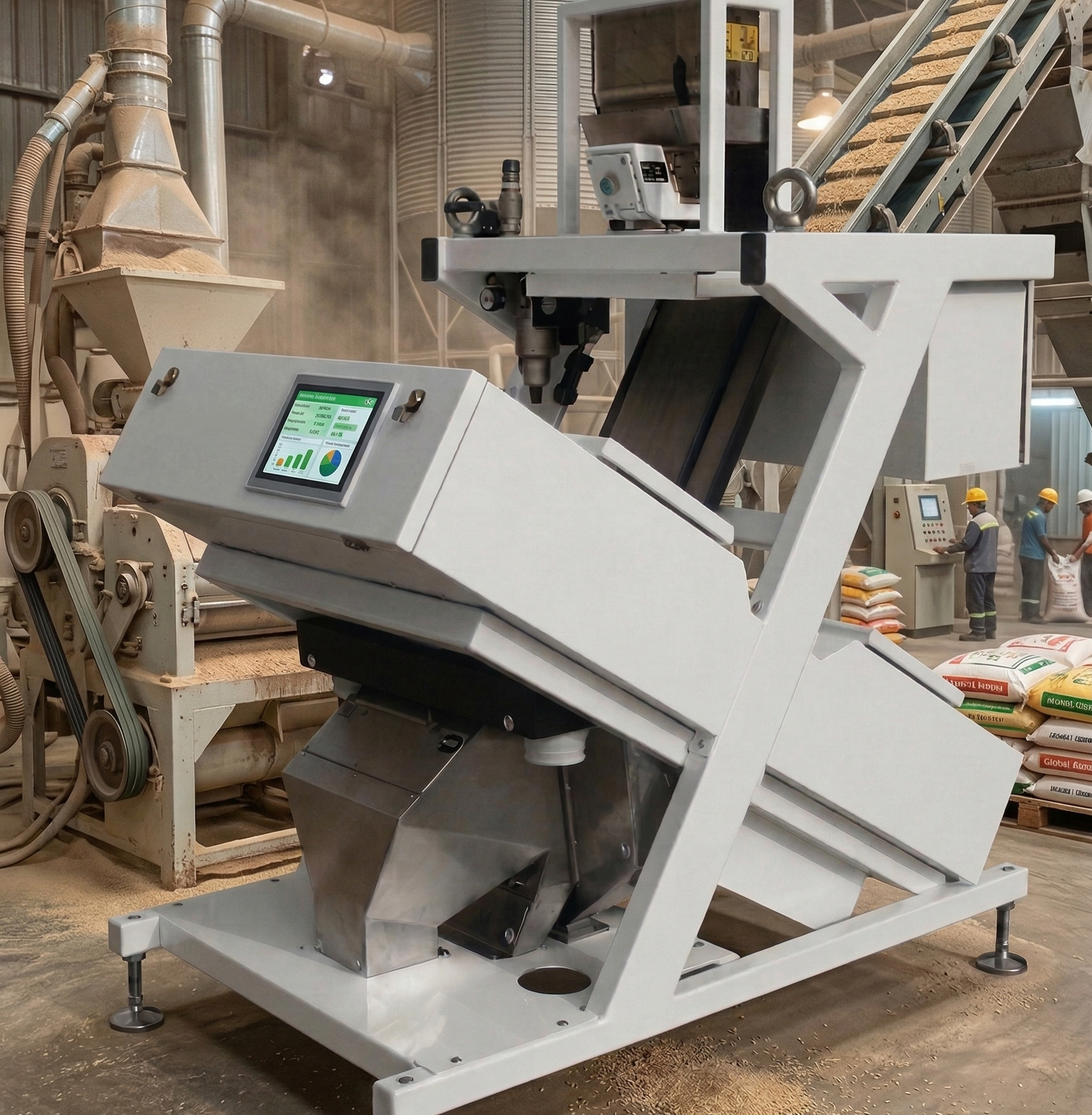
Sorting grain at production scale is harder engineering than it looks. Three problems define the space — and most platforms address only one of them well.

The Speed Problem
A single sorting channel processing rice at 5 TPH sees roughly 50,000–100,000 individual grains per minute. Each grain must be imaged, classified, and accepted or rejected — with the pneumatic ejector firing within a few milliseconds of the decision. Miss the timing window and the grain is already past the ejector.
This is not a machine vision problem with a generous latency budget. It is a hard real-time control problem. At line speed, every millisecond is a decision window that either opens or closes permanently.
The system must decide and act on every grain — at line speed, every time.

The Natural Variation Problem
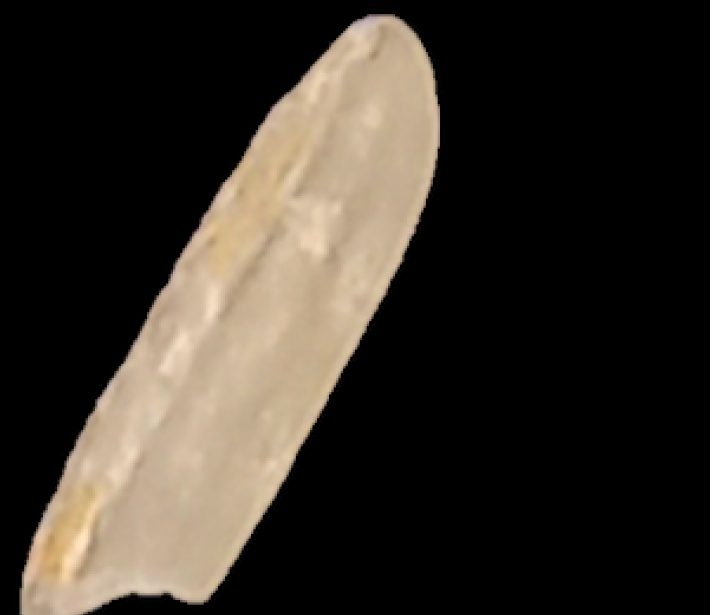
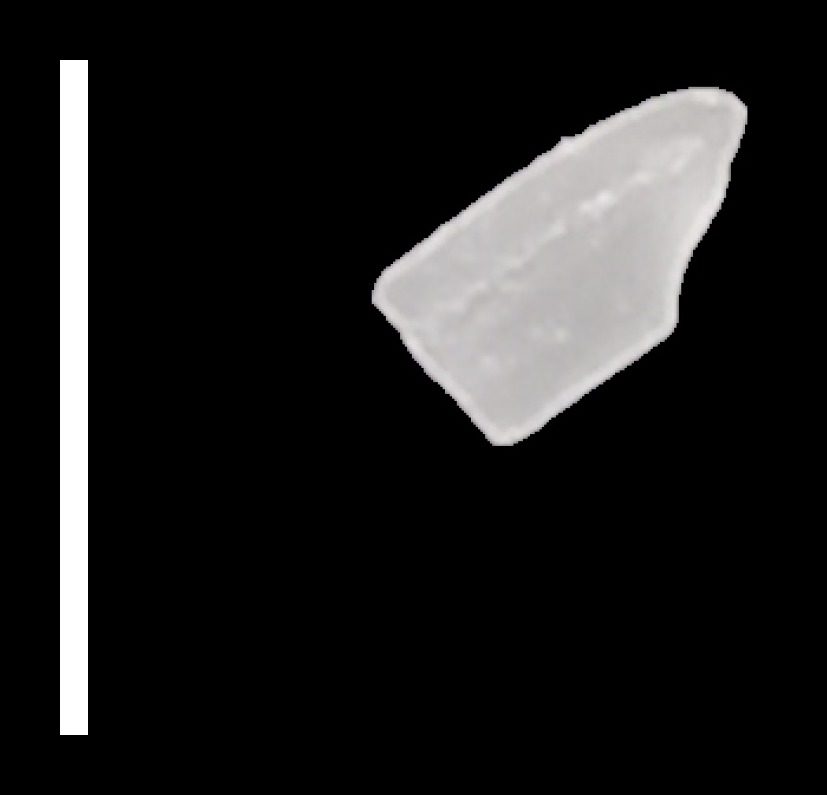
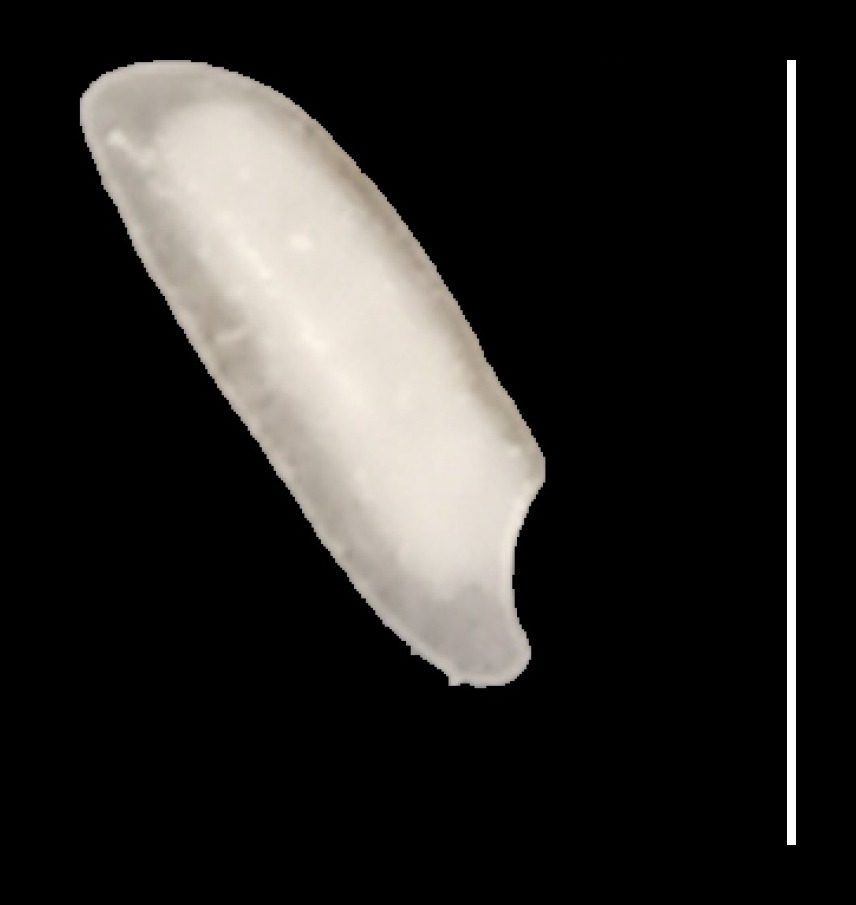
Grain is not a manufactured part. Within a single batch, good rice will have a range of sizes, colour tones, surface textures, and moisture levels — all of it acceptable, all of it normal. A system with a narrow detection window will over-eject good grain that simply sits at the edge of that natural range. Widen the window too far, and defects slip through.
The real challenge is simultaneous: hold a wide enough acceptance range to pass all the natural variation inside a batch of good grain — and still be accurate enough to classify a discoloured kernel, a cracked grain, or a foreign object as a defect within that same variation. A fixed threshold cannot do both. The system has to understand what it is looking at, not just measure against a set value.
Wide acceptance for natural variation. Precise classification of defects. At the same time.
The Falcon Sorting Platform is YantraVision's core sorting intelligence platform — built from first principles for high-speed, low-latency, hard real-time sorting. It combines line-scan cameras, LED illumination, custom FPGA processing boards, and continuous AI algorithms — all designed and manufactured by YantraVision — into a single compact module that OEM machine builders can integrate directly.
The FPGA core eliminates the OS jitter that causes PC-based sorters to miss events at high line speed — decisions are made in under 2ms, deterministically, on every grain. The Clever Sight Engine (CSE) is a continuous AI feedback loop that analyses the ejection stream and auto-tunes detection parameters in real time — so the platform holds a wide acceptance window for natural grain variation while still classifying defects accurately within it. The sensing configuration is matched to the application: RGB for standard colour sorting through to Multi-SWIR for deep material classification.
The platform is also built on a principle of right-sized engineering. The intelligence is in the FPGA core and the CSE algorithms — not in hardware complexity. No unnecessary sensor proliferation. No over-built modules for capabilities the application does not need. The hardware is exactly as complex as the grain sorting task requires — and no more. This is a deliberate design position, not a cost compromise.
Every grain is imaged as it falls. Features are extracted at pixel rate in the FPGA fabric. A compact classifier — fed through on-chip memory rather than external DDR — makes the shape, size, and defect call in under 2ms. If a grain is defective, a decision signal fires the pneumatic ejector before the next grain arrives.
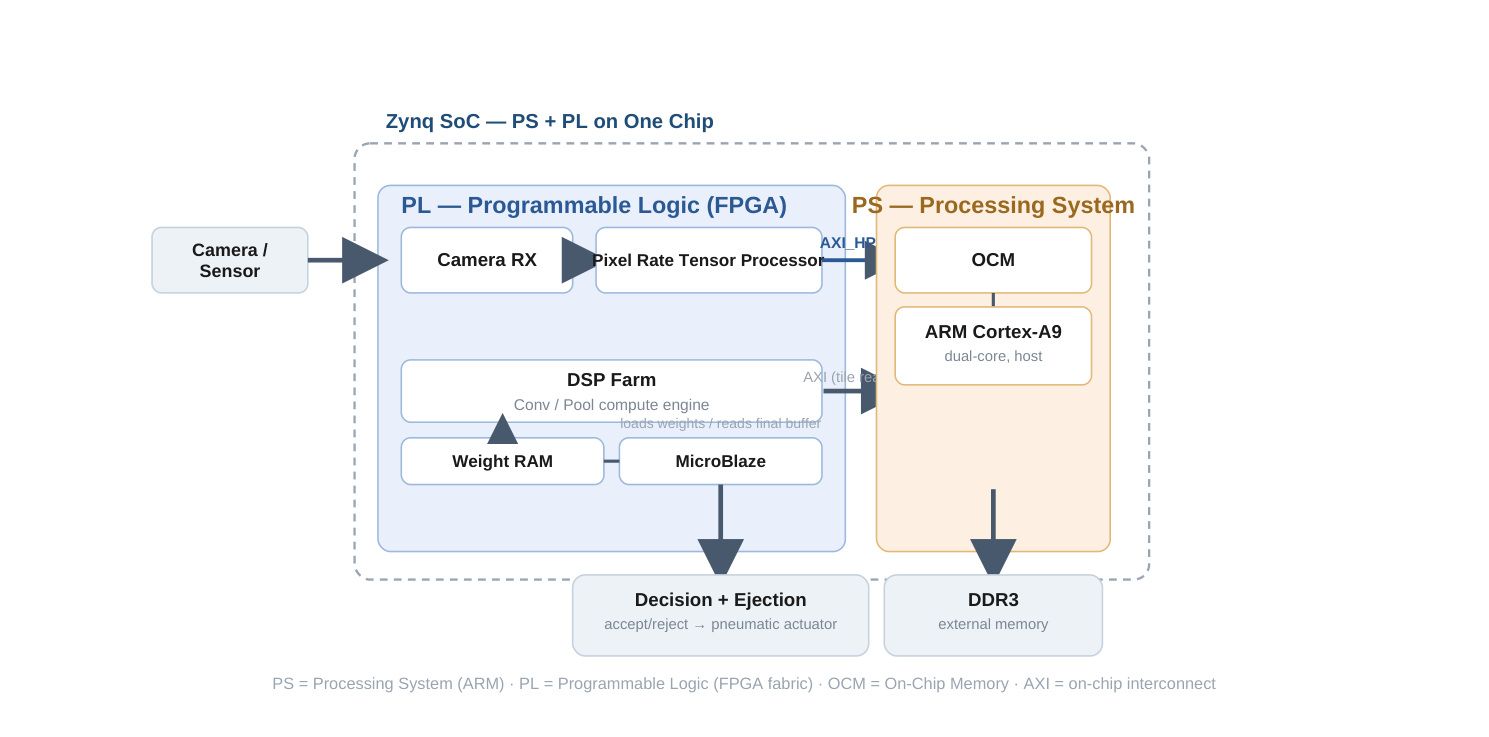
The differences between sorting approaches come down to three things: whether the system keeps up at line speed, whether it handles natural batch variation without manual intervention, and whether the engineering is matched to what the application actually requires.
| Capability | Conventional Sorter | Falcon Platform — YV |
|---|---|---|
| Processing latency | Variable — OS jitter risk | <2ms — deterministic FPGA |
| Throughput at scale | Moderate | High — FPGA hard real-time, every grain |
| Accepts natural variation within batch | Fixed threshold — over-ejects or misses | Live model of normal — wide acceptance window |
| Defect classification accuracy within variation | Trades off against acceptance | CSE holds both targets simultaneously |
| Sensing configuration | RGB (typically fixed) | RGB to Multi-SWIR — application-matched |
| Engineering fit to application | One-size hardware | Designed from the application out |
| Remote monitoring | Limited / add-on | ✓ Built in — web interface |
The Falcon Sorting Platform is not a reconfigured version of what already exists. It is a different engineering approach — FPGA-first, algorithm-led, designed from the grain sorting problem outward.
The sorting call on a grain line is not "what variety is this" — it is "is this specific grain whole, correctly formed, and free of defects." That requires decisions on shape and size, not just color. Broken and chalky grains are the same color as whole grain. Color thresholding cannot tell them apart.
Falcon classifies on shape, size, and surface — not color alone. Deployed on a rice and dal sorting line: 56,000 decisions per second, 99% accuracy, gravity-fed continuous operation.
The Falcon Sorting Platform is running in grain processing lines today. Talk to us about your application — rice, wheat, pulses, maize, or specialty seeds — and your OEM integration or mill deployment requirements.